SALVAR EL PLANETA: ¿CÓMO? / SAVE THE PLANET: HOW?
A participatory printmaking project exploring how individual actions can contribute to collective environmental change at the 15th Havana Biennial, Shared Horizons.
Video of activation: Saturday, November 23, in collaboration with the Akokán Community Project,
located in the Los Positos neighborhood of Marianao. Videos and photos are curtesy of Gaby Garcia @melodijogaby_
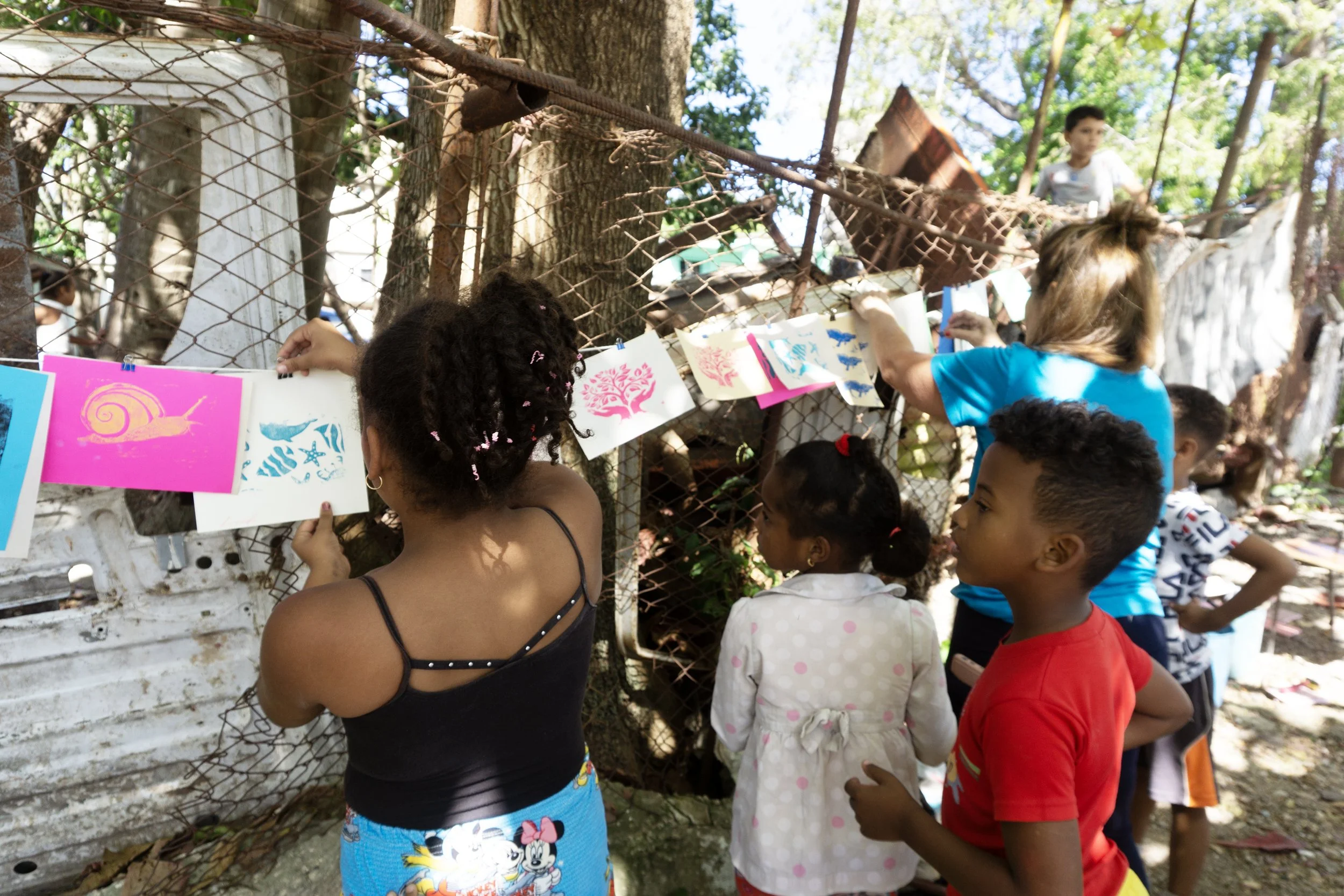
SALVAR EL PLANETA: ¿CÓMO? / SAVE THE PLANET: HOW? Is part of the 15th Havana Biennial, Shared Horizons, this social engagement project celebrates the Biennial’s 40th anniversary with an exploration of art’s potential to inspire. Running from November 15, 2024, to February 28, 2025, SAVE THE PLANET: HOW? is a temporary artistic intervention initiative that reinforces already established environmental education and consciousness with additional creativity through the art of relief printing in Havana's neighborhoods.
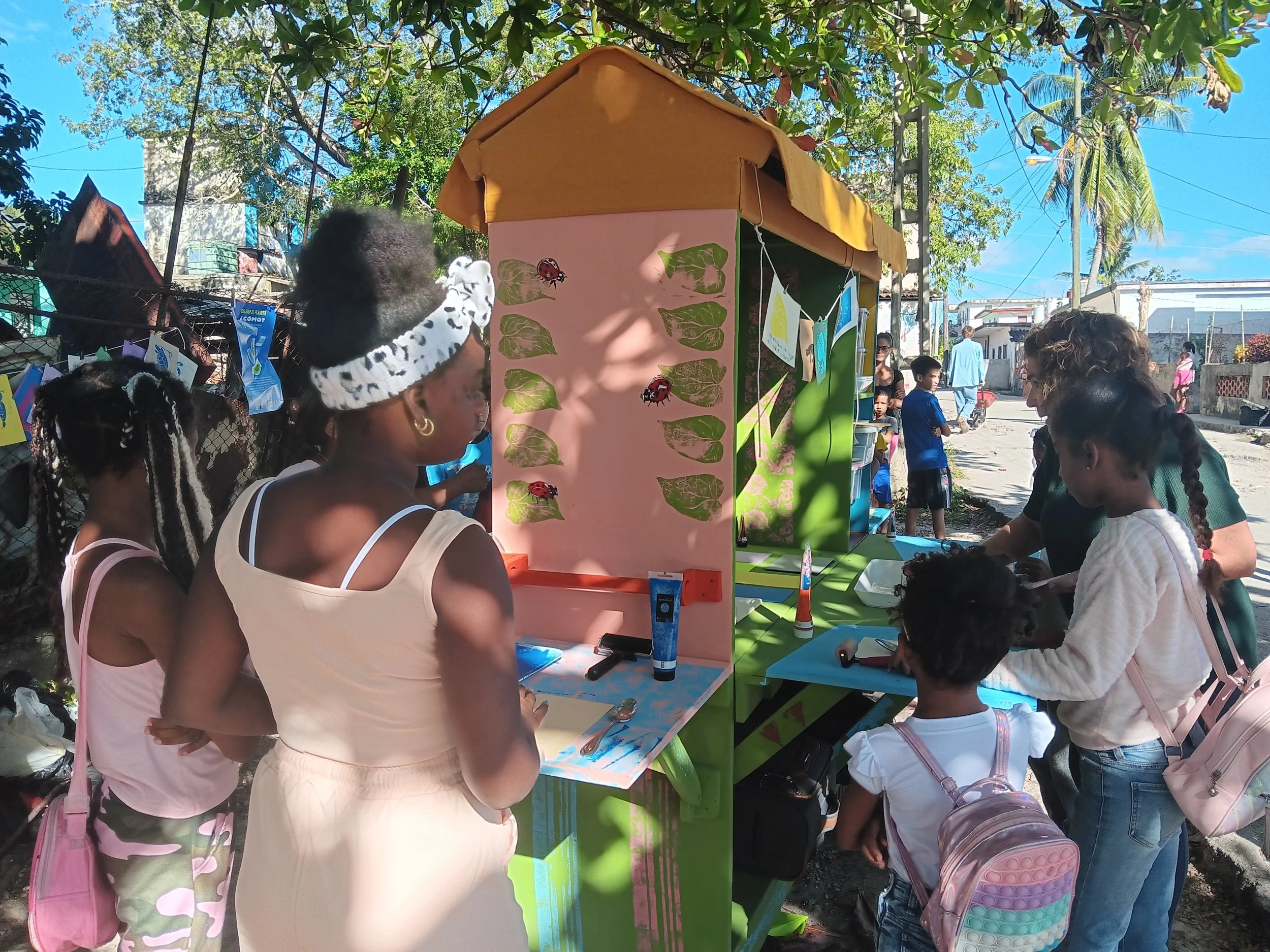
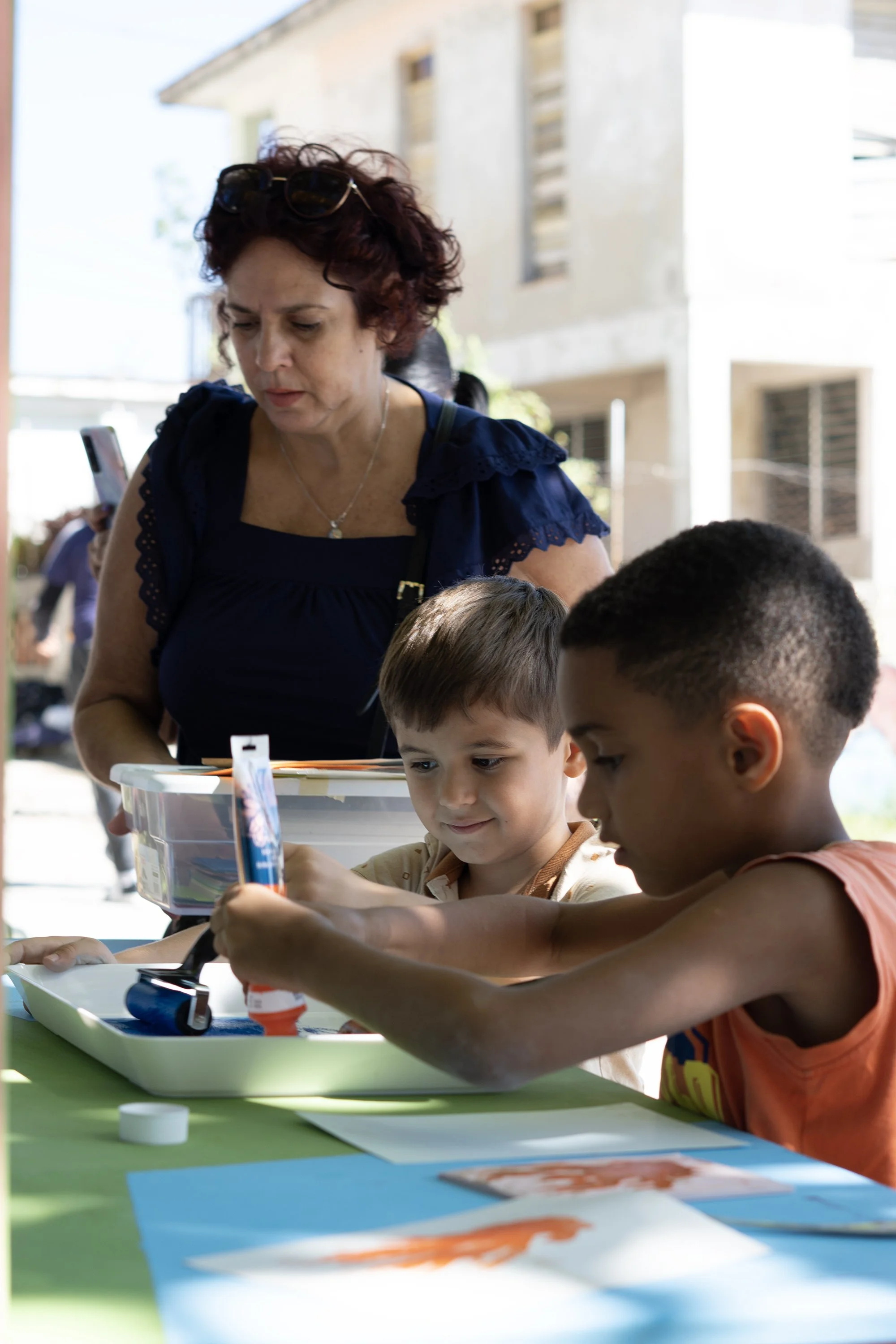
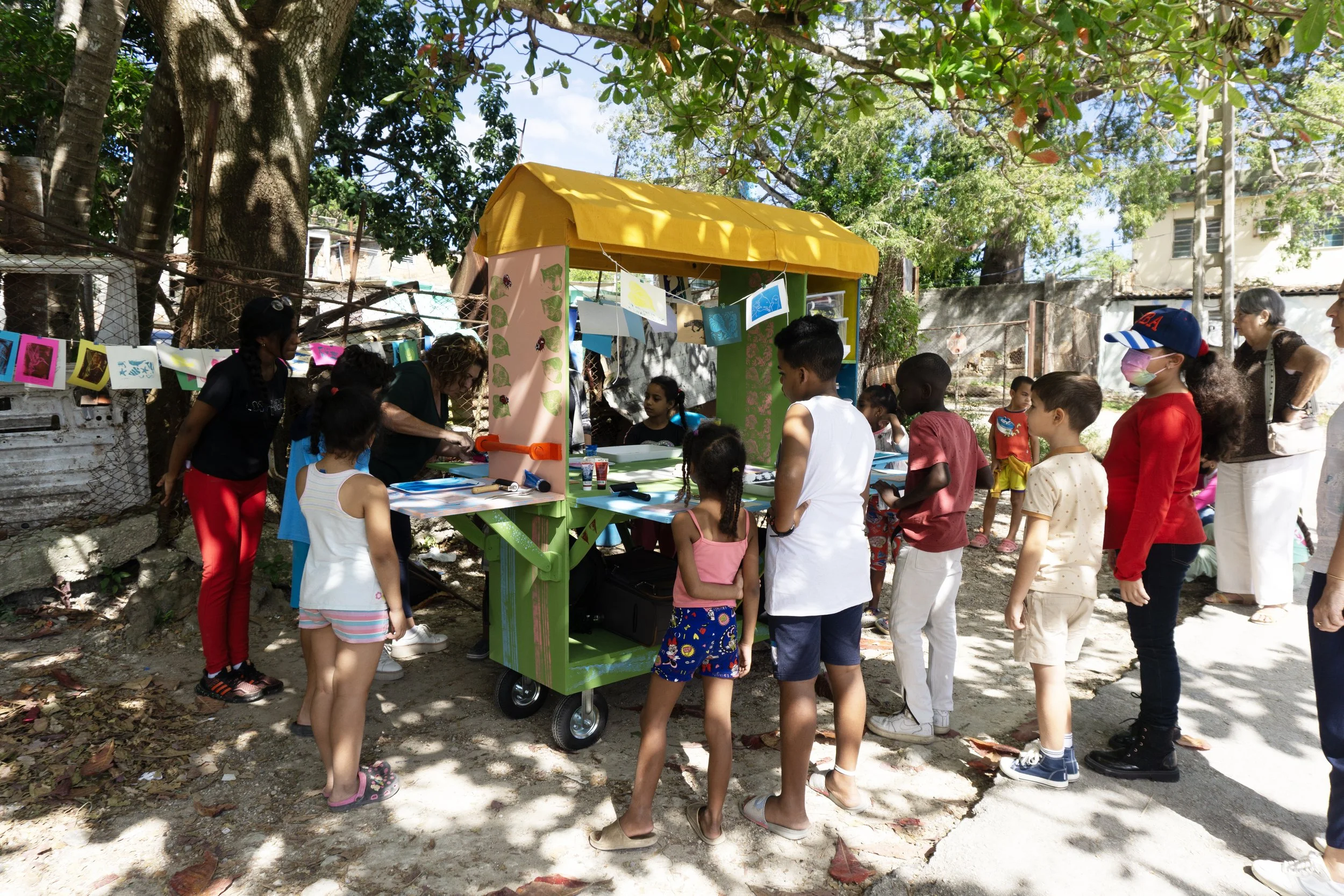
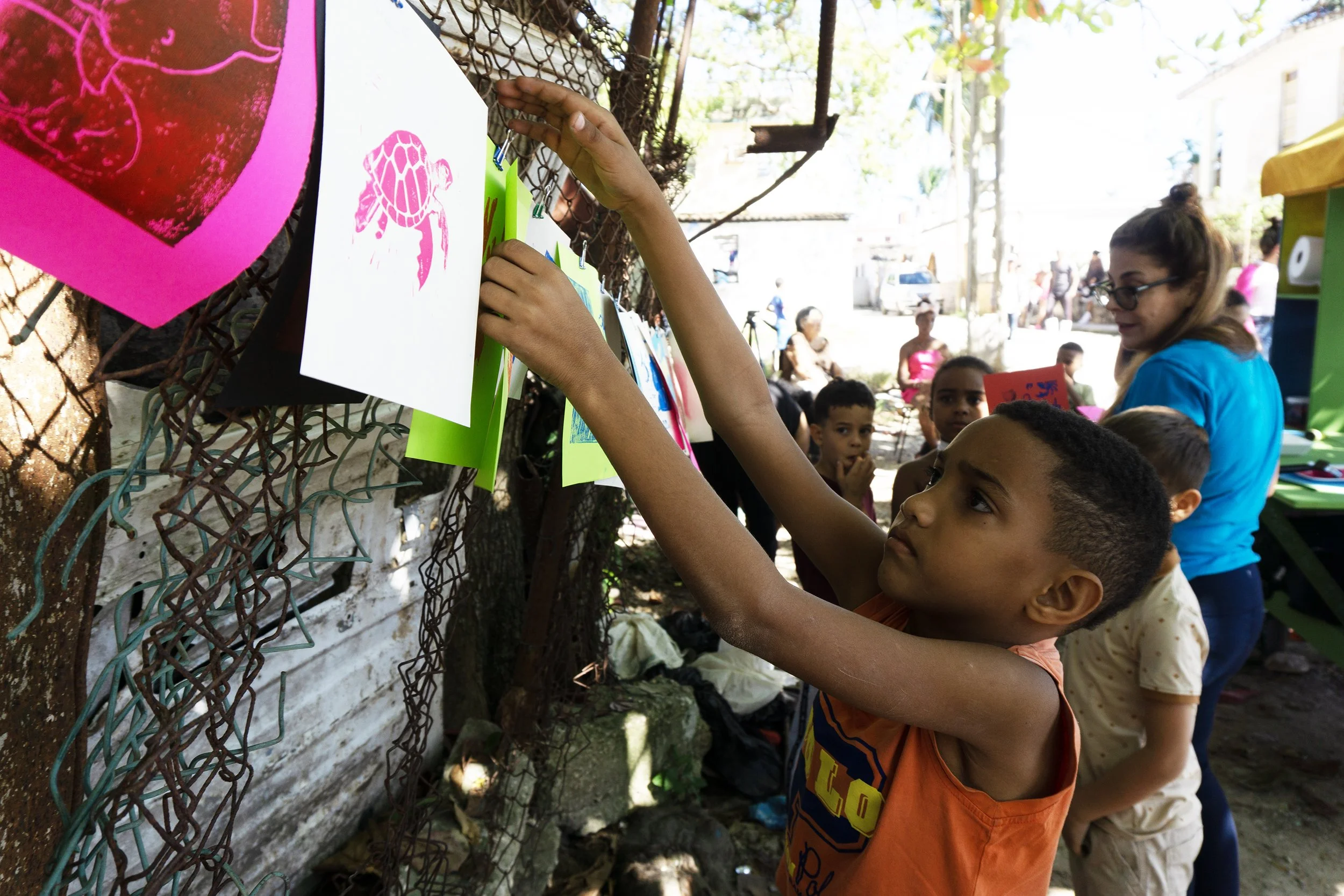
The project invites participants to think about and create handmade prints that reflect their aspirations and efforts to harmonize human activity with nature. At its heart is a unique, mobile art station, handcrafted by @carlosernestogrovas and his team out of wood and painted with vibrant motifs of Cuban flora and fauna. Designed to travel across diverse neighborhoods, this art station enables direct community engagement by providing access to printmaking tools, materials and conversations while engaging in unusual places in the act of printing.
The value of this project lies in its ability to engage participants holistically allowing them to explore their inner world, connect with others, and experience the joy of creation in the places where they live. Inspired by the Cuban traditions of the pregonero (town crier) and carretilleros (street vendors), who historically brought news, goods, and information to the streets, the mobile station is both a nod to cultural heritage and an embrace of contemporary environmental advocacy. Drawing from the rich traditions of broadsides and poster art in both Cuba and the United States, the project activates print as a shared communicative space rather than a one-way message. The printed works circulate through hands and conversations, inviting response, reflection, and exchange. In this way, the project uses the language of the broadside not only to inform or persuade, but to bring people together—creating moments of dialogue and collective consideration around the future of our planet.
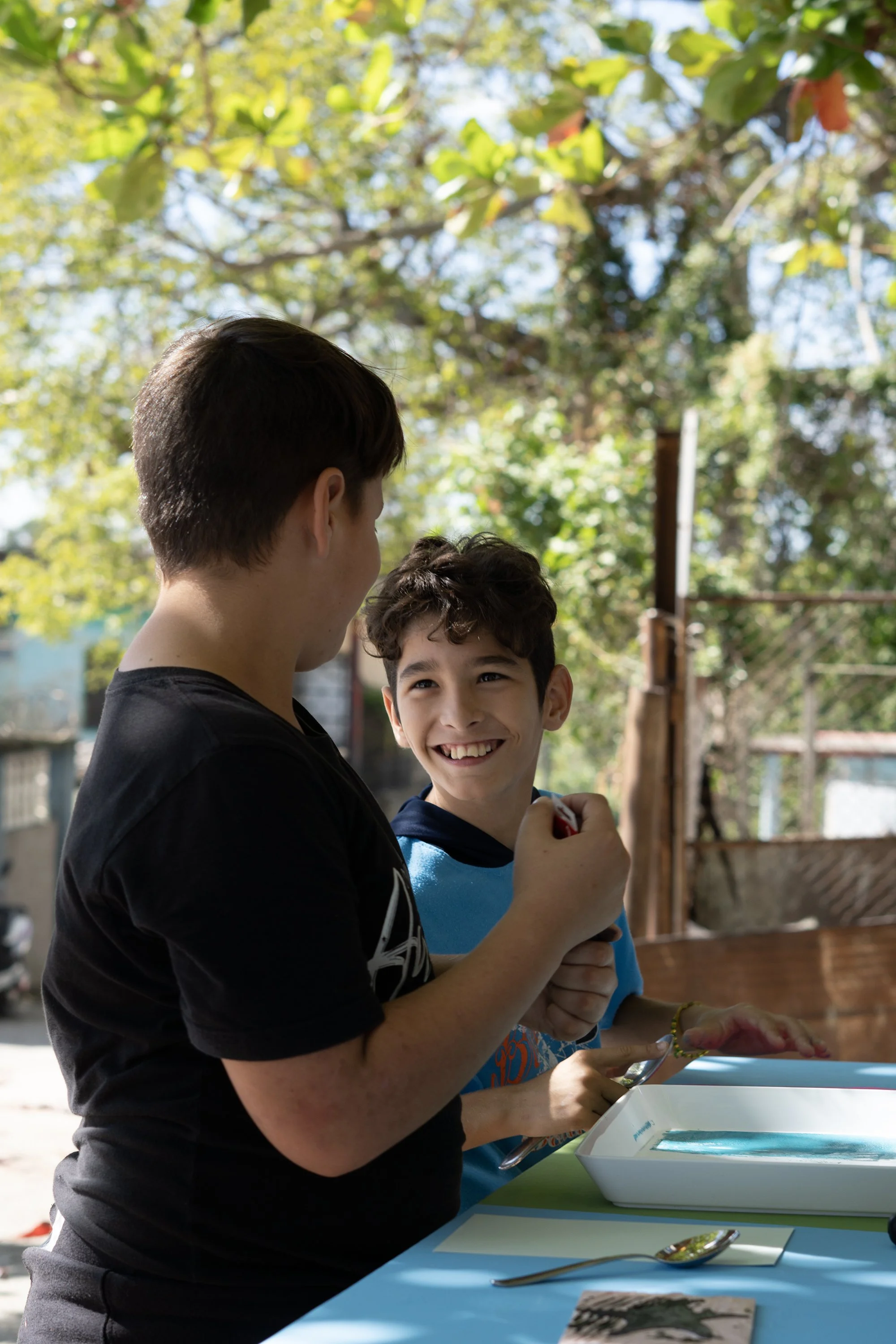
At its core, SAVE THE PLANET: HOW? engages audiences through simple gestures and collective acts that unfold through shared presence rather than spectacle. The project comes to life in public spaces, where meaning is shaped through real encounters, conversation, and collaborative making. What may appear symbolic is grounded in lived experience—participants print together, exchange ideas, and momentarily form a community around a common concern.
The project’s temporary nature emphasizes the value of these moments of connection, where each printed image and each interaction becomes part of an ongoing, living dialogue between art, community, and environment. Rather than existing as a fixed outcome, the work is activated through participation, circulation, and shared responsibility—leaving behind not only printed matter, but relationships, memories, and renewed awareness.
Video of activation: Sunday, January 26, Calle58A #4704 Entre 47 y 49 Ave. La Ceiba neighborhood, Playa
Videos and photos are curtesy of Gaby Garcia @melodijogaby_
Video activation: Monday, January 27, Taller Experimental de Gráfica de La Habana.
Videos and photos are curtesy of Gaby Garcia @melodijogaby_
Video activation: Friday, March 21, Centro de Arte Contemporaneo Wifredo Lam, Expansion 15 Exhibition
Video curtesy of @MeLoDijoGaby
Las artes se unen en el caribe con el 'Hay Festival' de Cartagena y La Bienal de La Habana
En cultura vamos hasta Cartagena, Colombia, con el inicio del 'Hay Festival' y su edición número 20. Su directora compartió con France24 la importancia de estos espacios y dijo que es un antídoto para la polarización. Además, desde la Habana, Cuba, les traeremos lo que La Bienal de Arte tiene preparada para sus 15 años. Cerramos la crónica con el hallazgo de una pintura que le costó menos de 50 dólares a un coleccionista y que podría ser un Van Gogh.